A War of Ignition
Gas prices aren't coming down any time soon, and now it looks like inflation may be next. But that's okay—those AI systems we all love so much are getting too expensive also.


Where the Iran War Is At
The United States and Israel are still at war with Iran with no real end in sight, despite repeated claims from the White House that we're somehow always nearing the end of the "special military operation."
While the fighting between the US and Iran has largely boiled down into a blockade from both sides on the Strait of Hormuz, Israel has continued their campaign in southern Lebanon, demolishing neighborhoods and clearing Lebanese land to "create a buffer zone" against Hezbollah even during a ceasefire. Literally using demolition crews and bulldozers to level Lebanese neighborhoods.

Beyond the immediate human impact, the global economic impact remains on the precipice of catastrophe. I don't say that lightly.
Sure, gas prices in the US are still high, averaging $4.222/gal for regular grade gasoline at time of writing. But the real impacts are hitting overseas currently, and will come home to roost soon enough.
With the Strait of Hormuz effectively shut down, oil and liquid natural gas (LNG) routes out of the region are severely limited. The US—being physically distant from the strait and being an oil producer itself—is slightly insulated from this, despite the rising fuel prices. Elsewhere, prices are spiking faster.
It goes beyond just "there's a war and/or a blockade," too. It goes beyond oil, LNG, and a POTUS who doesn't know how to read. The impacts of this conflict are affecting global shipping route chokepoints, causing international navies to consider escorting cargo ships. Freighter ships aren't keen to make a dangerous run for the sake of delivering a Labubu, so shipping costs are up. Insurance for those ships is up, since uh, it may go kerblamo.
And then there is the oil part too, of course. It goes beyond oil, but that uh… includes oil.
To quote the Wall Street Journal, "Even if the strait opens tomorrow, the hit to the global economy will be long lasting." Oil fields in Iraq, Saudi Arabia, UAE, and other regional nations have seen massive capacity reductions and infrastructural damage in some cases. It's going to take real, meaningful time for the infrastructure to be rebuilt. Until then, I would expect fuel prices to remain high, with inflation following suit in the coming quarters.
Funny (not actually) considering how hard the Trump admin was beating the "we'll make energy cheaper and that will make everything cheaper" drum for the first year or so.
AI Cost Inversion
It's an expensive time to be alive, doubly so if you are a corporation renewing your AI contracts.
My deepest sympathies, dear reader. I know how much you love renewing your corporate AI contracts.
Corporations and AI power users are quickly learning a valuable lesson: if the price seems too good to be true, it probably is. As companies continue to bake AI tools into their workflows, they've hooked themselves right on to the classic SaaS trap. Now, the vendor just has to turn up the pricing a bit each year and bam! I dunno what happens then, there's just more money moving around now.
Here's what's going on: when a company uses AI tools, the usage is generally measured in "tokens." Tokens are a measurement of the data processed by the underlying large language models (LLMs). Harder task means more tokens.
Now, the cost of tokens has dropped dramatically. That's not the cost issue here. In fact, the cost to run an LLM that is comparable to GPT-4 has nosedived as systems become more efficient and more capable. That said, there's the other side of things: the hardware to run it all. That price is only increasing as data center buildouts and GPU shortages continue to create massive money holes.
For a while, many of the corporate AI contracts were flat rate. Same for those power-user AI subscriptions. Pay a fee, access the system. Well, turns out when you have to pay per token, you can't just sell access to your system for a flat rate and then let people make unlimited use of it. So what happens next?
Just like Netflix every third Sunday of the month, AI companies have started increasing prices. Sometimes by a lot, and often through obfuscation.
Contracts are shifting to a token-based cost calculation, or otherwise meaningful increases to the contract prices themselves. Providers are pushing for price increases from 20% to nearly 40% over the past year, spiking well over expectations.
The bill was always going to come due. These systems are essentially an exercise in trying to make an intentionally inefficient thing run efficiently. It's a bit of an oxymoron, really.
So while we're already dealing with AI companies gobbling up water and power to run these machines that create hallucinated slop in exchange for dangerous smog, I guess we can add, "predatory vendor lock-in" to their list of naughty notes.
BP Investor Revolt
Hello, Albert Manifold. I'm sorry about your near-failed appointment as chair of the Anglo-Persian Oil Company. Er, uh, BP.
BP has been reducing their investment in renewable energy deployment and reinvesting in oil and gas since at least February of 2025. They've revised down their targets for reducing carbon emissions and removed their renewable energy target for 2030 entirely.
That was last year, but this month, BP had a few shareholder votes on resolutions put forth by the Good Company's board which would reduce the company's climate disclosures as well as allow its annual shareholder meeting to happen virtually.
The climate disclosure change was criticized as trying to look less bad as they pivot back into oil and gas, though BP executives maintain that it was a matter of reducing operating costs. As for allowing their meetings to be online, that move would reduce exposure to protestors who often show up at such events.
And while our boy Albert Manifold was elected as board chair, he only got a vote of a bit over 80%, which is actually pretty bad as far as chair appointments go. Typically it's near or exactly 100%.
Manifold himself has been the face of a controversy among BP shareholders after the board shut down a proposal from Follow This, an activist investor group who submitted a proposal asking essentially, "hey what is up with the whole giving up on climate initiatives thing?"
The proposal was originally accepted by the board, before Follow This was informed that it wasn't actually accepted and would not be distributed and put up for a vote. Since then, Follow This has threatened legal action against BP, and the resulting vote for the chair was, well, pretty bad as far as chair appointments go. I think that's how I described it. Yep. Just checked.
It takes at least a 75% vote from shareholders to pass special resolutions such as these, so I want to be clear that this isn't indicative of BP shareholders suddenly all turning on the company. That said, it is a very real move made by shareholders to push back on the company's efforts to quietly walk away from their previous climate commitments.
Ancient Ornaments
Wanna invest in beads?
An international team of researchers discovered a cache of ornamental clay beads and other decor, seemingly made by human hands some 12-to-15-thousand years ago. These discoveries have changed how scientists think about human cultural evolution, showing a focus on ornamental clay work in a sedentary society long before most other historic discoveries showed either of those behaviors.
142 Natufian ornaments were discovered across five research sites located in the Southern Levant (Palestine, Jordan, Israel). The Natufian people were unique in that they generally settled in one place before the rise of agriculture, during a time where most cultures were roaming hunter-gatherers.
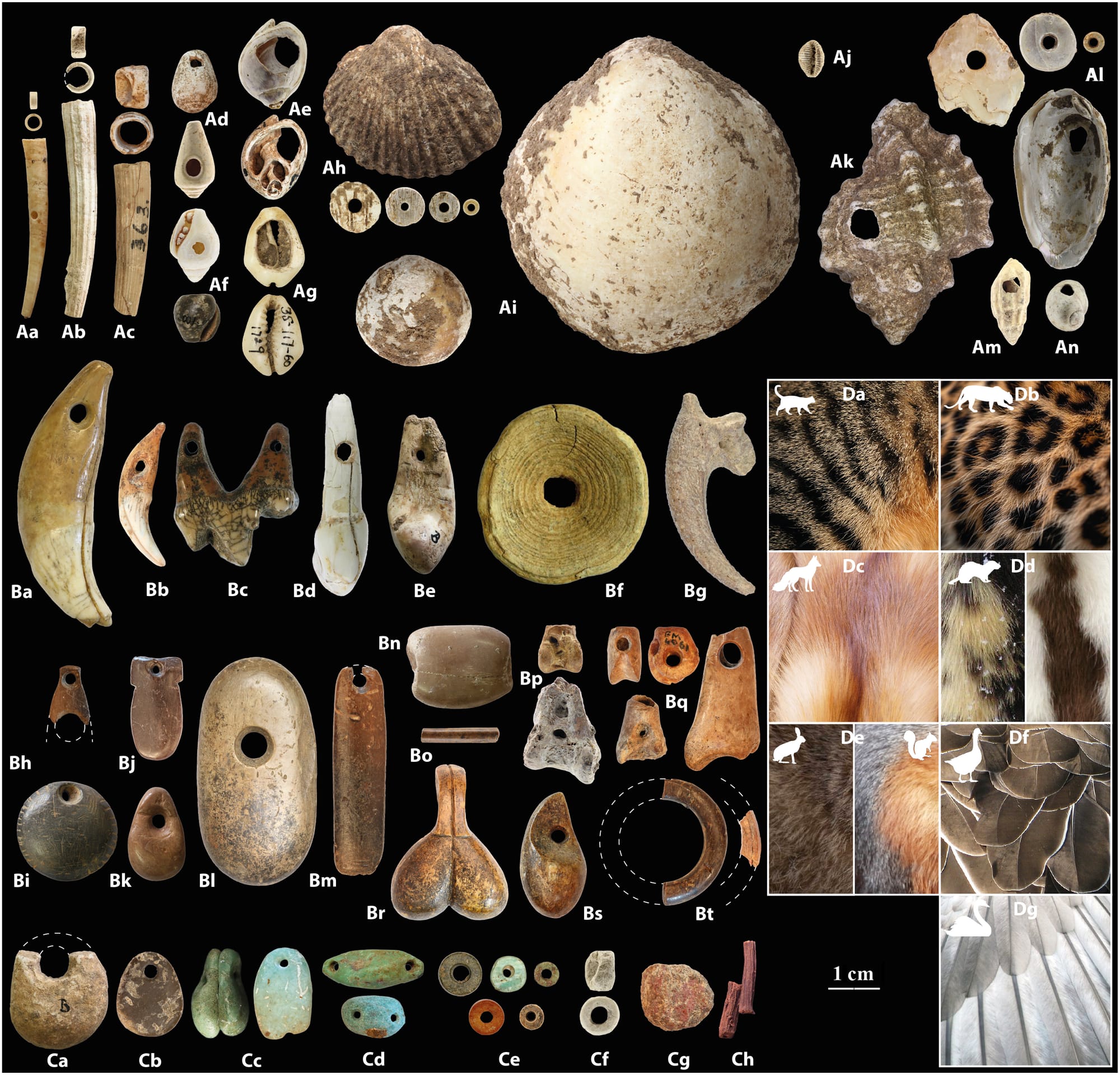
Before these 142 discoveries, we had only found five relics of the same classifications. So uh, we've got a bit more to work with now.
The coolest thing here, in my humble opinion, is that the fingerprints of the original creators were preserved in the clay. The researchers found human fingerprints from 15,000 years ago belonging to children, adolescents and adults, suggesting that folks all got together and did some arts and crafts even way back then. Art and expression, community and craft, long before agricultural society took root.
So now I ask you: would you like to make some clay beads in the hopes that some guy 15,000 years from now writes a newsletter entry about it?
Here's the Weather

More Stuff
- Astarian from Baldur's Gate 3 is getting a prequel novel
- US Federal Reseve chair Jerome Powell's term is ending soon with his final press conference yesterday, and the apparent replacement intends to stop doing press conferences, so
- A US based big game hunter was trampled to death in Africa by elephants while hunting antelope
- Someone reportedly attempted to shoot Trump admin officials at the White House Correspondents' Dinner this past weekend. Instead, he was detained, and it seems the only shots fired and taken were by Secret Service agents reacting to the guy rushing in to the building. The response online was swiftly either apathy or disbelief.