The Butterfly Effect
Do you think you would make a good bird?


I dash-danced my way to a four-stock victory, but Stuff still Happened.
So, what's up?
Dodgy Little Guys
Do you think you'd make a good bird? Sure, you can probably flap your arms pretty good, but there's more to being a bird than just being flappy. For example, you gotta be good at spotting bugs and snatching them out of the air so you can get back to the kids for their nightly vomit-meal.
Ew.
Turns out it's hard to be a bird, in part because we've learned that butterflies seemingly evolved to use a combination of erratic motion and wing patterns to throw off predators.
Researchers quite literally gathered up butterflies using a butterfly net, then analyzed their flight patterns to create a literal video game where you try to "catch" a butterfly based on a quickly rendered video of a butterfly's takeoff. What they learned is that humans make bad birds.
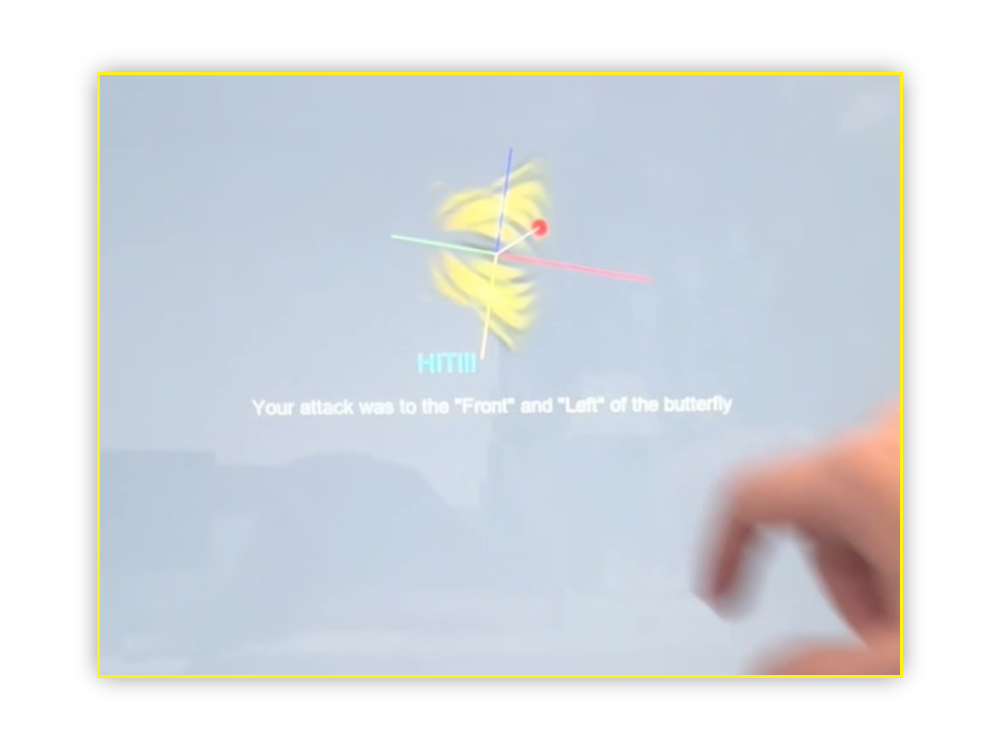
To create this game-of-the-year contender, they recorded a bunch of high frame rate videos of butterflies with a green screen backdrop, then used COMPUTERS to modify the video into an "avian luminance" (making it look like what a bird would see), thus creating a baseline reference for how flap do.
They then created flight pattern animations for a simple "catch the butterfly" kind of game, which was presented to 100 volunteers who each made 30 attempts to be a good bird. Because humans are not birds, the flight animation was also slowed down a bit. Turns out birds run at a higher frame rate than we do; possibly due to the price of a new graphics chip these days.
Of the 3,000 attempts, only 1,182 had the player "catch" the butterfly, which they defined as "tapping the screen within 30 pixels of the butterfly's hitbox."
Side note: It brings me endless joy to see the term "hitbox" used in an official scientific study.
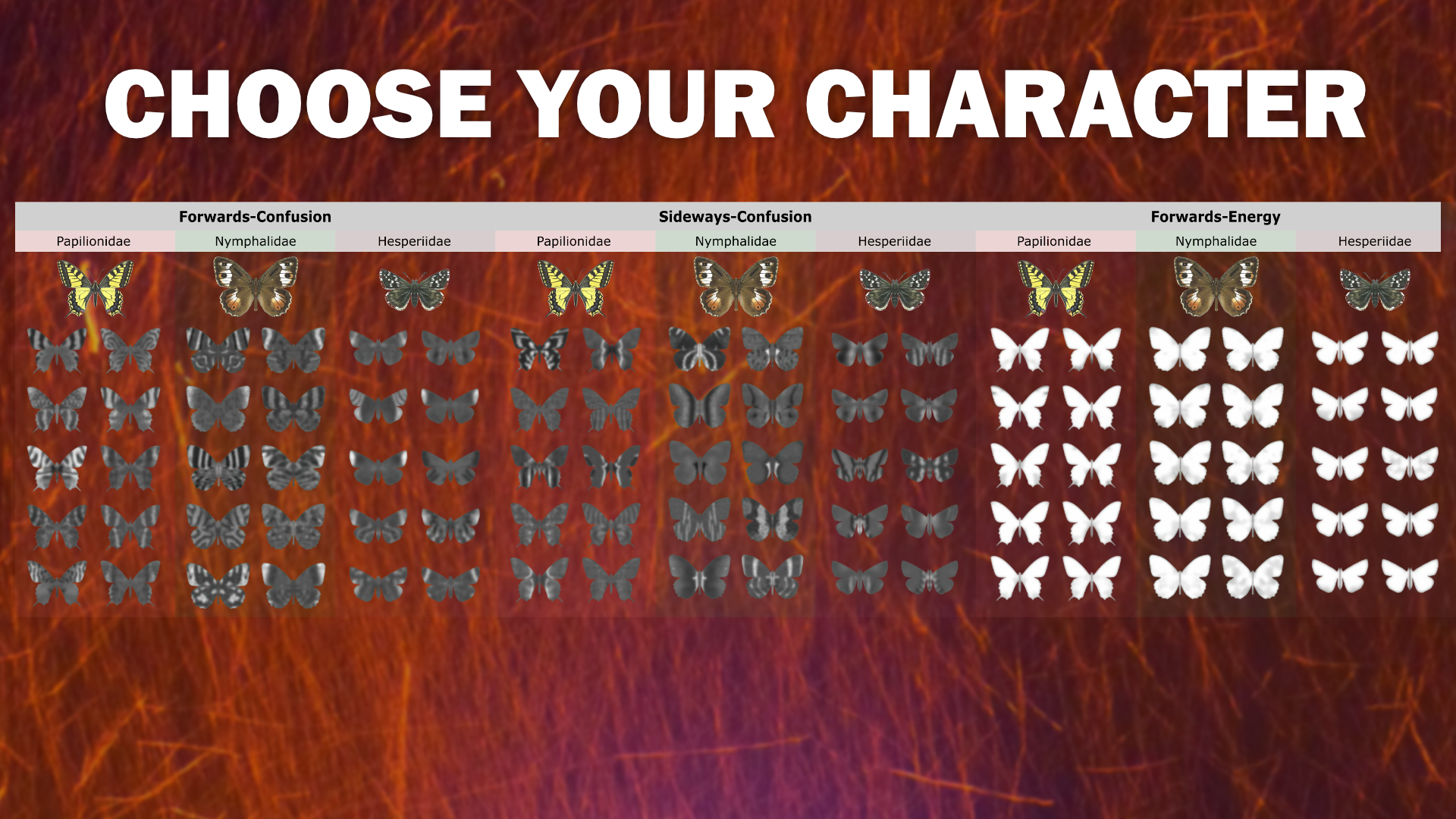
Anyway, they flap around and move in weird patterns to throw off predators, and we've even found that different patterns between species produce different outcomes for predator accuracy. So well done, butterflies.
ALSO, bonus butterfly story! What a day!
A young kid scientist in Japan has been studying caterpillars with guidance from a university entomologist to learn whether they "retain their memories" when morphing into a butterfly. They experimented using the scent of lavender as a cue for the bugs to avoid, then tested for continued avoidance of lavender after turning into a butterfly.
Turns out, yep! And what's more, their research seems to show that even future generations exhibited the "lavender sucks" trait.
There's more research to be done. This is a preliminary finding, not some revolution of the butterfly space. I also wanna clarify that this doesn't mean that "butterflies keep their memories" like some kind of flappy Isekai situation, but it does seem to show that there's something going on in those little guys that lets them carry on such behavior.
What Did You Say?
The unions make us strong. In this case, the Unions make us strong by suing the federal government over the ongoing digital surveillance that the US government has dramatically ramped up under the Trump administration as a part of their efforts to find and eject anyone who isn't their platonic ideal of a well-behaved citizen. (or as I read it: non-white non-Christians).
Last year, several major unions including the United Automobile Workers, Communications Workers of America, and the American Federation of Teachers filed a lawsuit against the Department of State and Department of Homeland Security over the Trump administration's efforts to monitor the social media posts of workers to punish negative opinions.
Recently, a judge struck down the government's motion to dismiss the case:
This threat of adverse immigration consequences, under a government whose harsh immigration crackdowns has been heavily publicized and reported on, is certainly enough to 'deter a person of ordinary firmness from the exercise of First Amendment rights.' It is objectively reasonable that noncitizens would limit their expression of disfavored viewpoints under the [Challenged Surveillance Program] given the credible threat of adverse immigration action from the Government
United Automobile Workers President and Guy Who Should Genuinely Consider Running in 2028 Shawn Fain had some words:
No one should have to fear government surveillance or retaliation against their immigration status for expressing their views or participating in their union. We're pleased the Court has allowed this challenge to move forward and will continue fighting to protect the rights of everyone to speak, organize, and advocate without fear.
This is not the end of the road for this lawsuit. Far from it—it's just a line in the sand drawn by a judge saying, "nah, this has legs."
Still, it is a meaningful lawsuit pushing back against one of the many avenues the United States has taken to go from an era of "oh my god, China is bad because they monitor what you're doing and have a social credit score" (which was never really accurate) to an era of "if you don't want this Flock camera installed in your shower head, you must be a criminal."
Suncor v. A Rock and a Hard Place
Boulder, Colorado has been beefing with major oil companies since 2018, when they filed a lawsuit arguing that oil companies knowingly contributed to climate change, which has caused devastating wildfires and natural disasters to increase over the years.
After bouncing around the state court system for a while (and a brief detour in and out of the federal system), it landed at the Colorado Supreme Court.
The companies argued that allowing such a lawsuit would set a precedent which would put them on the hook for major damages, which could basically amount to regulation. They said that federal common law preempts this already. The Colorado Supreme Court ruled, "nah dawg," reasoning that federal common law was already replaced by the Clean Air Act, which also doesn't help their case here.
Federal Common Law: Law made by federal judges through court case outcomes rather than explicit code passed by Congress.
Preempting: When a higher level law overrides a lower level one
Boulder: A rock (and a city in Colorado)
So from one Supreme Court, we leap to another: The Supreme Court of the United States, where arguments were held this past Monday over whether the case continues.
Legal representation for the oil companies continued a similar line of argument in the SCOTUS hearing. They asserted that Colorado cannot apply their law outside of the state. Further, they argued states shouldn't be able to bring such lawsuits as it would essentially amount to regulation.
Where we are now with this is an argument over states' rights versus federal law. What a quirky little scuffle we've never had before! The legal question is whether federal law overrides state law claims over interstate activity alleged to violate state law.
Boulder claimed that the Clean Air Act passed by Congress overrides federal common law regarding this case, and that it doesn't block Boulder's case to begin with.
As it stands, we're not clear on how this'll play out. At time of writing, there's a possibility of an even split among the justices. Justice Samuel Alito recused himself from the case, claiming that he just did so because it was "prudent." It may be due to his investments in other oil companies that could be directly affected by the outcome here.
The Trump administration is firmly behind the oil companies, with a DOJ representative saying "this suit egregiously exceeds constitutional limits on state authority." In response, Chief Justice Roberts was quoted asking, "I guess I'm not quite sure what makes this situation different from all those other ones where we've allowed [cases to proceed]," referencing cases where state law was upheld in such scenarios, such as the recent slate of internet and social media lawsuits. Still, he expressed concern on behalf of the companies regarding the possibility for more cases like this in the future.
With Alito out, that brings us to eight justices who will have a say on this, and the possibility of a 4-4 vote is real. In that case, or if they side with Boulder, the Colorado Supreme Court's decision would stay, and the world may look very different in the coming years as far as oil companies being all too happy to throw our planet under the celestial bus.
Boulder "winning" here would also just mean the case continues on. All of this is still arguing for the case to even go forward. So uh. Y'know. Stay tuned, etc, etc.
Only on Skyd-aramount-ickelodeon-central-TV-Network
Well, it finally happened: Paramount Skydance (controlled by the Ellison family) has closed its deal to take over Warner Bros. Discovery after a high-profile battle to create one of the largest media conglomerates for one of the largest deals of its kind ever made.
Surely, this is a good idea.
In August 2025, Skydance closed its deal to buy Paramount. Later that year, Paramount randomly threw out a bid to buy out Warner Bros. Discovery. That's also the same time it bought out The Free Press and in doing so made Bari Weiss the CBS News editor-in-chief. Still wild.
Warner Bros. Discovery rejected Paramount initially, but opened up for bids from other parties. Paramount repeatedly upped the ante, including Larry Ellison himself personally stepping in to guarantee $40.4 billion in the deal. Netflix had gone as far as to sign a deal to make the purchase, only to eventually turn back in the face of the outrageous money the Ellison family was pushing on the deal. The merger was agreed to in February of this year.
So in a little over a year, Skydance absorbed Paramount, Warner Bros. Discovery, and everything that comes with them, including but not limited to:
- HBO
- CNN
- Food Network
- TLC
- Nickelodeon
- MTV
- CBS
- DC Studios
- Warner Bros. Pictures
- New Line Cinema
Which I guess means it opens the door to a mascot battler featuring SpongeBob and Jon Snow fighting to the death?
This merger means that the "Big Five" studios are now the "Big Four," which is commentary enough in itself on this whole deal.
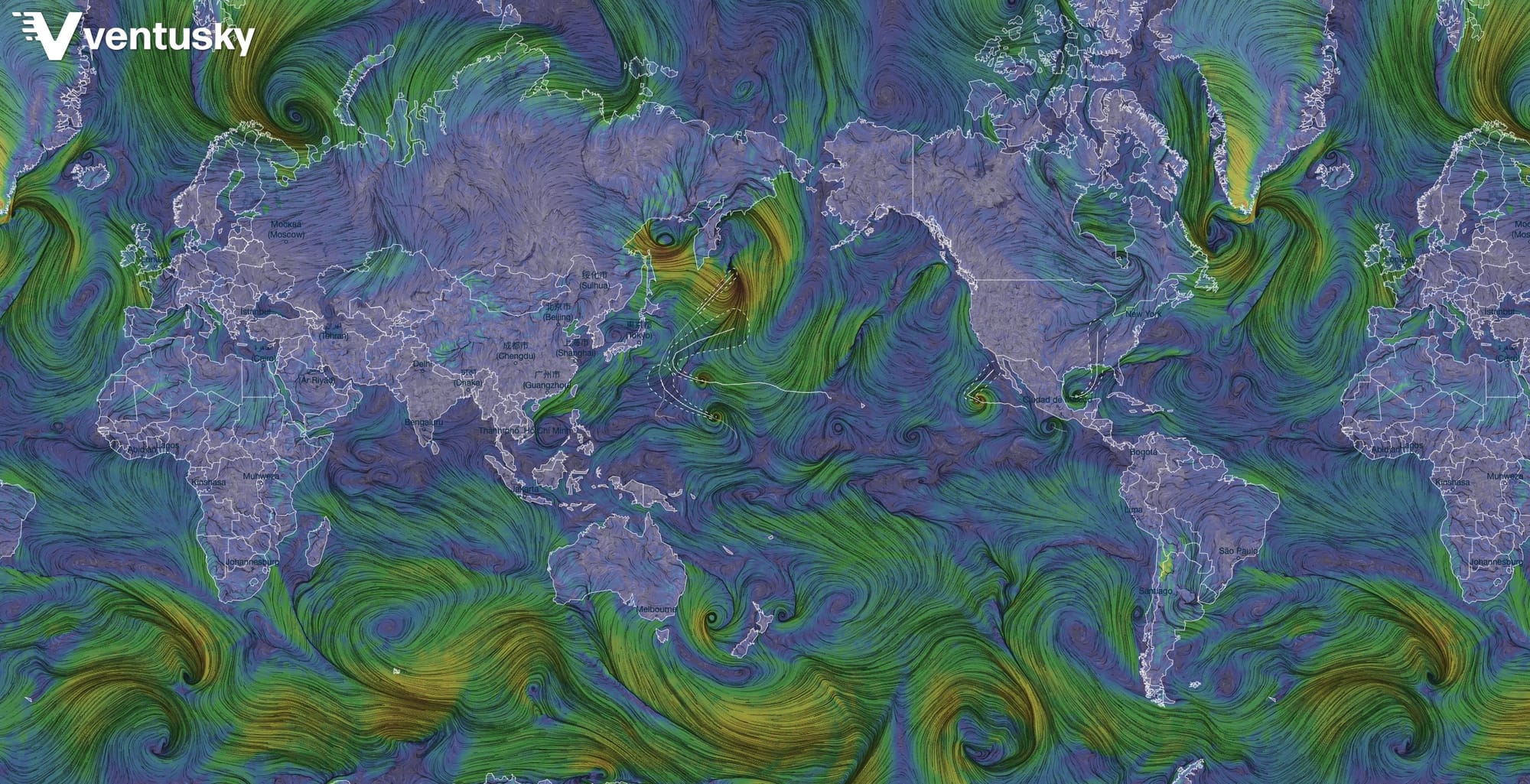
Here's the Weather
More Stuff
- Someone stole $20,000 worth of bees from private beehives in Queensland Australia. Don't… don't steal bees, please.
- Someone stole a Krispy Kreme doughnut truck in Philadelphia, Pennsylvania. Okay, fine, sure.
- Someone stole a shipment of beef ribs from a truck in South Philadelphia. I— is someone hosting some kind of criminal picnic?
- Capcom has announced they will be working to overhaul their in-house game engine to become an "AI generation game engine" because reading the room has never been Capcom's strong suit
- The TSA (US airport security) will now require officers who verify boarding passes and IDs to stand while working, because its 2026 and somehow we're still doing shit like this